


To link to this article from your blog or webpage, copy and paste the url below into your blog or homepage.
Data and Goliath: The Hidden Battles to Collect Your Data and Control Your World
a book by Bruce Schneier
(our site's book review)
Amazon's blurb for this book says: “Bruce Schneier’s amazing book is the best overview of privacy and security ever written.”—Clay Shirky
Your cell phone provider tracks your location and knows who’s with you. Your online and in-store purchasing patterns are recorded, and reveal if you're unemployed, sick, or pregnant. Your e-mails and texts expose your intimate and casual friends. Google knows what you’re thinking because it saves your private searches. Facebook can determine your sexual orientation without you ever mentioning it.

Google, Facebook, the government, and tracking companies are all watching you and they know all your secrets, and these Big Brothers are invasive, not brotherly
The powers that surveil us do more than simply store this information. Corporations use surveillance to manipulate not only the news articles and advertisements we each see, but also the prices we’re offered. Governments use surveillance to discriminate, censor, chill free speech, and put people in danger worldwide. And both sides share this information with each other or, even worse, lose it to cybercriminals in huge data breaches. (Such as the humongous Equifax Data Breach. The Equifax Data Breach: What to Do.)
Much of this is voluntary: we cooperate with corporate surveillance because it promises us convenience, and we submit to government surveillance because it promises us protection. The result is a mass surveillance society of our own making. But have we given up more than we’ve gained? In Data and Goliath: The Hidden Battles to Collect Your Data and Control Your World, security expert Bruce Schneier offers another path, one that values both security and privacy. He brings his bestseller up-to-date with a new preface covering the latest developments, and then shows us exactly what we can do to reform government surveillance programs, shake up surveillance-based business models, and protect our individual privacy. You'll never look at your phone, your computer, your credit cards, or even your car in the same way again.
Here are books that can aid you in learning about cybersecurity or Internet subjects:

Cybersecurity
- The Art of Invisibility: The World's Most Famous Hacker Teaches You How to Be Safe in the Age of Big Brother and Big Data
- The Art of Deception: Controlling the Human Element of Security
- The Cyber Effect: An Expert in Cyberpsychology Explains How Technology Is Shaping Our Children, Our Behavior, and Our Values--and What We Can Do About It
- A Bug Hunter's Diary: A Guided Tour Through the Wilds of Software Security
- Practical Malware Analysis: A Hands-On Guide to Dissecting Malicious Software
- Hacking Exposed 7: Network Security Secrets and Solutions
- Thinking Security: Stopping Next Year's Hackers (Addison-Wesley Professional Computing Series)
- Move Fast and Break Things: How Facebook, Google, and Amazon Cornered Culture and Undermined Democracy
- Is Facebook Making Us Lonely?
- Alone Together: Why We Expect More from Technology and Less from Each Other
- The Shallows: What the Internet Is Doing to Our Brains
- Your Children Are Under Attack
- Amusing Ourselves to Death: Public Discourse in the Age of Show Business
- The Digital Divide: Arguments for and Against Facebook, Google, Texting, and the Age of Social Networking
- The Filter Bubble: How the New Personalized Web Is Changing What We Read and How We Think

Data and Goliath: The Hidden Battles to Collect Your Data and Control Your World is an eye-opening call to action
The book is an eye-opening call to action. Anyone with even the slightest interaction with technology will do well to read and apply lessons from this book. No better cyber-horror story has been written than this book. Bruce Schneier reveals what he thinks should be the line for data collections and surveillance. And he clearly explores the issues of privacy, data collection, mass surveillance, and the violation of your rights that exist today. He's optimistic about the ultimate fate of our society but cautions that we have a lot of work to do to get the laws fixed and the surveillance under control. This book will quickly change the way you view privacy.
Your rights have been diminishing alarmingly at the same time we've all become objects of surveillance by the national security state. We're "free" to throw away our computers so our emails and searches and viewing habits are no longer the NSA's playthings, and we're free NOT to protest or demonstrate so we don't end up on watch lists and even on no-fly lists. We're free NOT to drive around or walk around the streets where Big Brother's cameras watch our every move. So with all these "freedoms," why do we not FEEL more free?

Security cameras watch you everywhere—apparently not only Santa is checking whether you're naughty or nice
Security cameras, surveillance of your financial transactions, radio frequency spy chips hidden in consumer products, tracking of your Internet searches, and eavesdropping on your e-mail and phone calls. Without your knowledge or consent, every aspect of your life is observed and recorded. But who is watching the watchers?

By 2008, the idea of communications privacy in the United States had literally become a joke—our government watches your every move

Fly #353242252 reporting: Citizen #312,756,972 doesn't seem to be hiding a thing—my conclusion is that she's clean; but just to be sure I think I'll hang around a bit longer!

Since all U.S. citizens have had thoughts that are unorthodox or outside the official government platform since Trump assumed the Trump-fantasized Trumpthrone, we're all guilty of thoughtcrimes
This book presents lots of facts about how things are now (invasion of privacy, tracking, hacking, data breaches, government snooping), as well as a clear roadmap and vision for the future we all would rather live in. The author gives us a meticulously researched, broad overview of how changes in technology and politics influence our privacy, security and freedom. Snowden’s whistleblowing inspired and informed some of the book's information. Schneier makes numerous references to Edward Snowden and he—and we—view Snowden as a hero. He views Snowden's act as a courageous one since it resulted in a global conversation about surveillance being made available. Had it not been for Snowden, Obama would have continued to lie to us and Trump would be lying to us about surveillance. See Bravehearts: Whistle-Blowing in the Age of Snowden.

Edward Snowden, the hero with the type of rare bravery we all should aspire to
The book outlines the negative effects of mass surveillance, such as stifling free speech. He looks at the risks arising from the abuse of power from secret agencies, like the NSA. He illustrates how data mining techniques are ineffective at finding terrorists, but are very helpful in intimidating and controlling whole societies. The author does not dispute the patriotic intentions of the personnel in the NSA, DHS, FBI, etc. Schneier's criticism relates to how these agencies are organized and the issue of little oversight and how their recently acquired mass-surveillance tools are not cut out for the job of finding terrorists but rather population intimidation.
The U.S. has become a surveillance society. WE cannot recollect being consulted on such a radical step! WE cannot recall being allowed to vote on the matter! What kind of democacy goes fascist without our consent—the consent of the governed? The ugly answer is: an oligarchy, NOT a democracy. See:
- Democracy—an American Delusion
- Freedom of the Press—an American Delusion
- The Rise of the American Corporate Security State
- Our take on a review of Lost Rights: The Destruction of American Liberty
- Lords of Secrecy: The National Security Elite and America's Stealth Warfare
- The American Deep State: Wall Street, Big Oil, and the Attack on U.S. Democracy
- Shadow Government: Surveillance, Secret Wars, and a Global Security State in a Single-Superpower World

Our nation's actions are making the Founders turn over in their graves
This book poses and answers a couple of questions: What is the meaning of our lives in the modern age of constant surveillance? What kinds of checks and balances are required in terms of personal data collection, corporate data surveillance and ubiquitous mass surveillance by governments? The answers are comprehensive and well thought out. They conclude that the biggest cost of surveillance is our liberty. Note: There's an angry New York Times review of this work which attacks the author for upsetting the status quo. That alone gives us a reason to get the book, since if it rocks the mainstream media's boat, it must be doing something right!

Resisting the abusive kinds of data surveillance and control is critical. So we must avoid, resist, agitate for change, and not give up. This is essential in the post-Snowden era
"Schneier worked with journalist Glenn Greenwald to analyze the documents released by National Security Agency whistle-blower Edward Snowden. In the process he learned of remarkable innovations in US electronic intelligence. . . . Schneier reminds us that law enforcement and intelligence agencies have struck up an uneasy and often unwelcome alliance with corporate America, raiding commercial databases to support a campaign of ubiquitous surveillance aimed at nearly everyone on earth. . . . Schneier claims all-pervasive government surveillance hasn’t made our nation more secure. Every time a potential terrorist has been caught in recent years, it’s been due to old-school police and intelligence techniques, not the digital dragnet." (Source: ‘Data and Goliath’ by Bruce Schneier, Hiawatha Bray, Boston Globe)
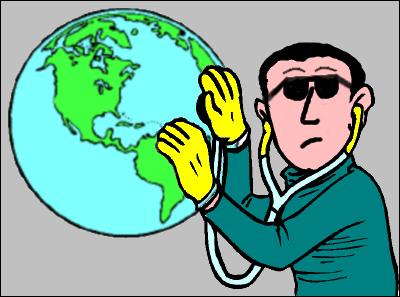
Law enforcement and intelligence agencies joined with corporate America, raiding commercial databases to support surveillance aimed at nearly everyone on earth
Every time a potential terrorist has been caught in recent years, it’s been due to old-school police and intelligence techniques, not the digital dragnet
". . . there aren’t a lot of crimes being solved by this surveillance. Crimes are solved by following the leads. That’s how terrorism plots are foiled. Whenever we ask the government, ask the police or the NSA to show how this surveillance is necessary, they can never come up with good examples. . . . Privacy is a fundamental human need, and it’s not about something to hide. I think that’s a very wrong characterization, and we should fight it at every opportunity. . . . we need laws to protect us against government surveillance and against corporate surveillance. . . . I think the threats are great, because algorithms are making decisions, not people, and that’s very dangerous." (Source: Data and Goliath: Bruce Schneier on the Hidden Battles to Collect Your Data and Control Your World, Amy Goodman and Juan González, democracynow.org)
"How to effect change? Schneier breaks down his prescription into four parts: 'solutions for government' (laws, rules, and procedures, including many that are already in the works); 'solutions for corporations' (business models, best practices); 'solutions for the rest of us' (crypto, privacy tools, products and best practices we can follow to take us out of untargeted surveillance); and 'social norms and the big data trade-off' (when it's OK to gather user data, to spy, and to data-mine, and how to have that discussion)." (Source: Bruce Schneier's Data and Goliath: The Hidden Battles to Collect Your Data and Control Your World, Cory Doctorow, boingboing)
The US is wasting billions on these surveillance programs but they are not receiving the security they have been promised. Schneier suggests that we should be using the money on investigations, intelligence and emergency response; programs whose tactics have been actually proven to work. Data and Goliath: The Hidden Battles to Collect Your Data and Control Your World recognizes that much of the problem stems from federal agencies since keeping the citizens' fear alive is big business. That is the basis of influence and power in U.S. intelligence agencies. Schneier also lays some of the blame on the media who stoke the irrational fears in the daily news. In summary, Data and Goliath: The Hidden Battles to Collect Your Data and Control Your World is a must-read for purposes of awareness about security, privacy, and freedom.
"He focuses on the social costs of surveillance, which 'puts us at risk of abuses by those in power…exacerbated by the fact that we are generating so much data and storing it indefinitely.' He also argues that this 'pervasive mass surveillance' will inevitably chill progressive movements—e.g., gay rights and cannabis decriminalization." (Source: Data and Goliath: The Hidden Battles to Collect Your Data and Control Your World, Kirkus Reviews)
Google has declared an unprovoked war on all progressive sites such as Alternet.org—by far the worst and most naive and ignorant action they've ever taken in the history of their company. What does democracy even mean if the big G makes their sites unfindable? Not only hyper-surveillance puts us at risk of abuses by those in power, like Google. Google pretending to dump "fake news" but then dumping progressive sites instead is step 1 of fascism. Google has turned into a propaganda engine. It used to be a search engine that found a diversity of opinion in its results. But it has decided to dump non-mainstream, non-conventional wisdom websites that do not tow the party line. Like Trump calling anything not to his liking "fake news," Google has labeled as fake news any ideas that are non-mainstream, non-conventional wisdom—websites that do not tow the party line. Goodbye democracy, folks, since the same thing occurred in 1930s Germany once Hitler got control of the media. To repeat, Google has turned into a propaganda engine. For more about Google's massively heartbreaking sellout to the mainstream media, see The Master Switch: The Rise and Fall of Information Empires. IF ONLY THE GOOGLE LEADERS WOULD READ BOOKS ON HOW TO KEEP DEMOCRACY AND JOURNALISM HEALTHY!
For a comprehensive summary of the 4 ways you can protect yourself from digital surveillance, read Data and Goliath: The Hidden Battles to Collect Your Data and Control Your World or see a huffingtonpost.com article by Bruce Schneier: Data and Goliath: Four Ways You Can Protect Yourself From Digital Surveillance.